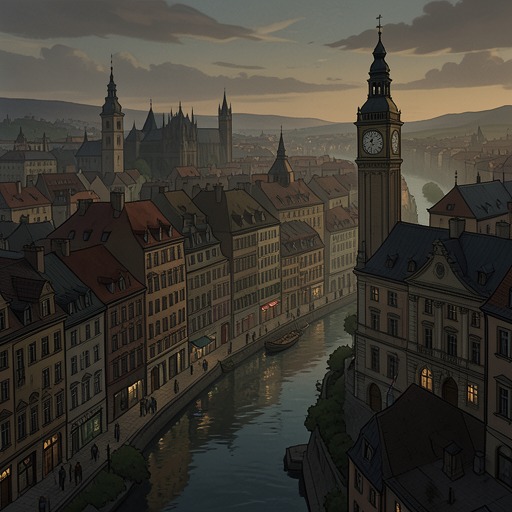
Paris was always worth it
A Moveable Feast“Paris was always worth it” is the memoir’s culminating expression of attachment to a city that never stays the same. Its force comes not from claiming that life there was easy, but from setting difficulty, change, and private memory against the enduring value of returning. Paris remains recognizable as Paris, yet its meaning shifts with the people who live there and the lives they bring back to it.
Meaning and Paradox
The statement follows the narrator’s insistence that there is no final ending to Paris: every person who has lived there carries a different memory of it. Return is possible under different conditions, with difficulty or ease, and the city gives something back in proportion to what a person brings. The expression therefore holds permanence and change together. Paris endures, but the experience of Paris does not; its value is renewed through particular lives rather than secured by an unchanging view of the city.
The closing qualification narrows the claim to a specific remembered period: Paris as it was in the early days, when the narrator and his companion were both very poor and very happy. The phrase is consequently neither a general promise of comfort nor a denial of hardship. It names a value that can survive hardship, while remaining bound to the circumstances from which the memory was made.
The City in Daily Life
The remembered Paris is made from close observation as much as from grand landmarks. At the first cold rains of winter, the city’s sadness arrives with the wet black streets, closed small shops, and the narrator’s cold room high above the street, where he worked. The practical cost of heating that room mattered: he calculated the price of kindling and wood, then walked on rather than risk spending money on a fire that might fail to draw. The city’s emotional atmosphere is inseparable from the material limits of living in it.
Other walks open a different view. After work, or when trying to think something through, the narrator walks along the quays. Below the Pont Neuf, at the pointed head of the Île de la Cité, he watches fishermen work the currents and backwaters of the Seine with long jointed cane poles, fine leaders, light tackle, and quill floats. The changing river level alters the best fishing places; the careful practice of the fishermen makes the urban river a working landscape rather than a picturesque backdrop.
On bright days, he sometimes buys a liter of wine, bread, and sausage, then sits in the sun with a book and watches the fishing between the Île Saint-Louis and the Place du Verte Galente. He does not fish himself: he lacks the tackle, wants to save his money for fishing in Spain, and cannot know when work will end or when he will have to leave. His pleasure depends on watching and knowing the city, but remains shaped by money and the uncertain demands of work.
Walking and Writing
Walking gives the narrator a way to think, while the route itself registers the pressure of work and economy. After paying a check, he crosses the rue de Rennes specifically to avoid going to the Deux-Magots for coffee and takes the shortest way home. The movement is practical, but not merely incidental: the streets connect the problem of what to write with the place where he works.
At the Closerie des Lilas, he sits in a corner with afternoon light over his shoulder and writes in a notebook. He drinks half of a café crème after it cools, then leaves it on the table while he works. The story taking shape concerns a return from war, yet makes no mention of the war. The river appears instead as a place the writing has entered: he does not want to leave the imagined pool, where the surface pushes and swells against the bridge’s piles. Paris is valuable here not only as scenery but as the lived setting in which attention, movement, and writing meet.
Return and Change
The final declaration comes after a period of renewed happiness. The narrator says he loves his companion and no one else; while they are alone, he works well and they make long trips. He believes they have become invulnerable again. That confidence lasts through their time in the mountains, but the other trouble begins again after they return to Paris in late spring. The return does not restore an earlier life unchanged.
The memoir marks this as the end of the first part of Paris: the city remains Paris, but it will never be the same again, just as the people who live in it change. The narrator and his companion never return to the Vorarlberg, and neither do the rich. Against that irreversible change, “Paris was always worth it” is not a claim that every return recovers what was lost. It is an affirmation that the city can still repay what is brought to it, even when both the place as remembered and the people remembering it have changed.